Showing posts with label Unit 11 – Film Studies. Show all posts

Wednesday, 20 January 2021

Final Version Of My Film & Evaluation


Evaluation:

This is the final version of the film i wanted to create. The final product compared to my powerpoint plan are very similar however slight changes were added from the feedback given after the powerpoint was shown, this feedback i was able to add to my film and i believe it made the final outcome better, so the feedback was vital for this film. I used a couple filming techniques to show to the audience the theory of Laura Mulvey's theory of 'The Male Gaze'. These filming techniques used would include Cinematography such as use of different camera angles and Mise en scene which would include, lighting, the environment setting, props. Editing could also be included in this as it helped bring everything together and i was able to add features into the film to make it give more of an effect to the viewer.
The films meaning is how influential social media can be, in the film i focus mainly on Instagram as it revolves around pictures of ourselves, this can be hugely influential and impactful towards everyone but especially younger generations as they begin to see these images of 'perfect bodies' all over there timeline and will aspire to be that. Even though the majority of the time, these 'perfect bodies' are either edited to look a certain way, professionally enhanced by doctors or the result of a unhealthy lifestyle. But these points don't get talked about enough when it comes to influencers online, so many people can be obsessed with becoming an unrealistic goal. When this includes the 'Male Gaze' theory, is that these images are so popular for a reason, this is because people know what will sell, for example the 'male gaze' started out in film and some people would only go to watch a film for these sexualised scenes of women. This then progressed when social media was introduced, it meant it was easier for people to see these images of women and men, and they could sexualise them as they pleased in the privacy of there own home so it increased in popularity like crazy. That is why images like this get so much popularity and are then able to be shown to a wider range of people. So with this is mind influencers wanted to take advantage of this, as they could make this into a business, this then leading hundreds of thousands of people to follow that same path, so it's just seen as a norm now. This shows that no matter where, the 'Male Gaze' can be included in pretty much anything if people see it that way. I believe i applied the 'Male Gaze' theory into my film because i wanted to show how the 'Male Gaze' has became normal and can be seen as a desire to look like what is used to be the 'Male Gaze'. Then how this can effect a person, mentally and physically, then these were shown in the film. I also included text screens randomly throughout the film, these pieces of text were quotes from young girls and there experiences with how social media has effected there body images, or comments they have received while on social media about there bodies.

The Cinematography:

With the use of different cinematography techniques i wanted to express emotion with lighting as well as use a variety of different camera angles and techniques to experiment with different directors i'd researched that also had the 'Male Gaze' theory featured in there films.

Camera angles such as zoom in's which i mainly included when it was the getting dolled up scene of her doing her makeup, particularly on the eyes and lips as this is something a lot of people try to enhance day to day so i thought it would be important to include that. By using in the zoom in techniques it shows the audience what they should be paying attention too and pointing it out to them without actually telling them.

Another camera techniques i used once in this film was panning. I used this when my sister walked into a room and past the camera. I believe this shot could be represented how now she has downloaded Instagram, the whole world is watching her and can see everything she is doing. so the use of a panning shot here was to give the impression that camera are following her everywhere she goes now as she enters the world of social media.

I used a lot of still shots when filming this because i wanted the message of the film to come across more than using all different camera techniques throughout. These still shots allowed my sister to act out her scenes and show the emotion she is going through.

Towards the end, i decided to shoot the scenes of her with mascara running down her face handheld because it gave the impression that she is very unstable at this moment so it represents her well. As well as this, i knew these shots were only going to be very short so the use of a tripod was unneeded as i wanted a more chaotic look towards the end as her whole character falls apart.

Mise en Scene:

The song featured in the film was very important to me and i wanted to include it because the lyrics are all how how men sexualise women in person and online. The types of lyrics throughout the song that point this out are:
"Wondering why I don't look like Barbie, They said boys like girls with a tiny waist"
"Got boys acting like they ain't seen skin before, Got sent home to change, cause my skirt is too short"
So i was really happy to be able to link the song to the meaning of the film is very beneficial because some people may be able to focus more on the song than the film and vise versa.

The lighting i used in this film represents the emotions that my sisters character, i wanted the one red colour to be used negatively and multiple times throughout. It is used in the beginning when the character is judging herself in the mirror and it is then used again at the end when everything is chaotic. I did this to link the two scenes together to show that even after the character had changed herself to please others and trick herself into think she was making herself look better, in the end it shows that all this extra stuff people do to pleases others will never make you happy if you truly don't love yourself for you. I used the colour red because i feel like it's a very dark red so it can be very ominous in these scenes but also a very bold noticeable colour which is why i used it in these scenes so they can be remember and linked by the viewers.

 I used a lot of props in this film, such as multiple items of makeup, different outfits, a phone, magazines and pens. All these props were essential for this film as they all play a part in different scenes. The makeup items are in the portion of the film which i consider a montage of the character getting all dolled up and trying to look 'perfect' or 'acceptable' for social media. Makeup in general is very influential as well, the majority of advertisement for it is all 'get the perfect look' or 'look drop dead gorgeous' which insinuates that you need these products to look that way, all selling into the idea of 'Male Gaze'. I used a different outfit for when she transforms into this 'perfect' version of herself because it has a slightly revealing top which would link to 'Male Gaze' and the stereotype of how revealing clothes gets more attention online. The phone can be seen as a negative and a positive, negative because it is the key into getting trapped into social media and get's people hooked onto being addicted to social media but phones are also positive because it allows you to contact peoples easier and can help many situations in general.Linking to the theory, it can be the way that many people first discover what the 'Male Gaze' is but it also allows more people to be educated on it than ever before.

Editing:

Throughout the editing process I had an idea in mind from the beginning planning of what i wanted the final film to be like, however from feedback during the process of editing it, the ideas i originally had changed a little bit. Changes such as adding a swell effect at the end of the film to create tension mixed with other audios to create a chaotic effect.
Throughout the film i have the song Strawberry Shortcake playing through it until the last 25=30 seconds however twice in the film, i lowered the audio so the music remained in the background but then added news reports/interview audio of people talking how how social media effects people and how types of images gain certain attraction, this then links to 'Male Gaze'.

I also added in text scenes of quotes from young women who have experienced body image problems because of social media and the types of comments they get on social media. This gives examples of how the 'Male Gaze' impacts so many people, all different ages.

To give the end a chaotic effect, i clipped in very short shots of close up clips of the character in the films, staring directly at the camera, it give it a a very eerie effect when watching the end, showing just how much body image can mess someones mental health up.

I created a montage type feel within the film of when she's getting ready to take a picture for social media. This montage was inspired by the many montages used in coming of age and romance films when one character has a huge makeover and suddenly everyone loves them, however that's in movies and i wanted this to be as realistic as possible. So even with the montage type feel, it doesn't have a good result after.

Final Conclusion:

From the original plans to the final outcome, i believe i have achieved what i set out to accomplish. Also that I was able to link Laura Mulvey's 'Male Gaze' theory well through different techniques into my short film. If I was to go back and improve, I would try and add more camera angles and different techniques throughout the whole thing. I would also add my own audio into the film somehow, almost as if the voiceover is the characters thoughts and that the audience can hear the characters thoughts throughout the film, showing the comparison of how they change. 
Another thing I would want to improve on is the environment/setting that the film was filmed in because it's a pretty average backdrop so if i had more time i'd research different locations to make the film more pleasing to watch.

References:
Song (Strawberry Shortcake By Melanie Martinez - https://www.youtube.com/watch?v=iPQ7L_VfawA


Saturday, 19 December 2020

Final Film Plan:

 Final Film Planning Process:

For my final film these are some criteria's i have to achieve when making the film:

  • It has to show an example of one of the theory's we have been learning about, i decide to focus on the 'lack' theory by Jaques Lacan. I could also include that there could be a hint of the 'male gaze' theory created by Laura Mulvey but this wouldn't be the main theory focused on.
  • When filming i love the use of colour in film, especially to show emotion in characters as i believe it isn't used enough in films today and can change the entire scene with creative lighting techniques.
  • The beginning with start with a phone conversation that leads the main character to end up being influenced by her friend to download instagram and explore the world of social media.
  • I then want this new social media platform to be essentially a rabbit hole full of the expected but unrealistic beauty standards that girls and women push themselves towards constantly.
  • Then showing the reflection and comparison which goes through the girls mind, when she is reminded of her actual body compared to all the body types/figures plastered all of instagram, corrupting her mind with this fantasy idea that the new beauty standard is easily achievable.
  • After this I wanted to create a montage type feel clip that links towards the typical scene in movies where there is a makeover of the main characters, so i want to have very close up scenes of the model dolling her self up, trying to achieve that perfect instagram look that society pressures her to look like now. This then also links to the lack theory and how she desires to be more like the people she sees online, always wanted to improve herself and be the perfect person.
  • I think throughout this whole video, the only audio i want that's non-diegetic is the phone call at the beginning that started this whole downwards spiral off, just to emphasis that one decision can change a person entirely. Especially when they have the the pressures and influences from her close friends. Then for the rest of the video i want to research and find the perfect song to add to the video, so it makes the video visual rather than factual.
  • Another idea i had was that I wanted to feature quote directly from a interview that was about how social media affects your body image. I felt like this gave the video a more realistic feel to it, because it gave examples of how this affects lots of other people around the world as well, because peoples expectations to look picture perfect all the time isn't possible.
  • Once the montage is complete, she will still be seen editing her images to look completely different compared to her normal self before, showing how much the use of social media has effected the way she sees herself and the way she feels a need to change herself drastically to please others.
  • All of this pressure to look perfect effects her mental health as well because nobody can ever be perfect. This creates frustration and built up a hatred towards images of women and girls who are portrayed to be perfect in magazines or social media so towards the end of the video, i will film her snapping. Snapping by going crazy, ripping pages out of magazines, maybe even burning them. I want to show this type of emotion as frustration can be demonstrated and shown different ways and change quickly too, so the switch from angry to frustrated to then sad, may be a good way to show the come down from everything getting to her and that she can't take it anymore. Then i want it to end there, hopefully this will be impactful to the audience and make people try and understand how much peoples desires can take over everything else they feel is important, pushing them to their final tipping point.

Wednesday, 16 December 2020

Final film powerpoint plan

 PowerPoint ScreenShots:


These screenshots are a rough idea of what my first initial idea were for my final film production. After feedback on the teams call, i decided to go with the first idea however the theorists linked are different and the storyline is a little different as well.

Friday, 11 December 2020

Film Notes - Laura Mulvey

Laura Mulvey - Male Gaze Theory

Laura Mulvey was a producer, director and actor in the early 1970s as well as being a film theorist. Her early work showed the investigation on spectatorial identification and it's relationship to the male gaze.
Her ideas and clear proof of misogyny in films allowed a lot more people to see this theory as well and this eventually helped the issues around gender that were present in many films.  Laura Mulvey quoted herself that women are "the bearer of meaning and not the maker of meaning." suggesting that women aren't placed in roles where they can be in control of a scene and everything going on in the scene, instead they're placed in that role to be observed and seen as a 'nice view' for the audience viewing the movie, objectifying the woman playing the role to be seen as a prop or object. These ideas are more enforced becuase typically the films are shot from a heterosexual males point of view/filming it so in a way the audience is forced to view it all from his eyes, making them look at the woman a certain way.

This became a social norm because it was being placed into out films and people were not noticing it at first so it because normal, this then led to the male gaze correlating with normal day to day life. Stuff such as advertisement: 
This advertisement  is in a subway and it's promoting weight loss protein shakes but any people who view this advert may be negatively effected by this advert because they don't look like this woman because her job is most likely keeping her body fit and healthy so that's all this woman focuses on unlike the everyday person who uses the subway all the time. As well as this many people then get an idea that this advertisement is the idea woman that they must strive to have even though this image is probably heavily edited and very unrealistic.
This is another example of how the media use woman to gain attraction from audiences by not even recognising them as a human being and completely wiping their identity so all they are to the public is a body to be looked at and sexualised. This is also a very common marketing technique  lots of big media companies use, is that they only have the body parts that appeal to the majority of the public on display to sell a product because the admired body is being associated with product.
I believe this technique of using images of headless or no identity women so it allows the audience to let their imagination go wild and picture whoever they want to sexualise with the body. This soon became recognised and even had a twitter hashtag of #Headlesswomen trending on twitter because it had gone unnoticed for far too long.


Although the theory of 'male gaze' is becoming more recognised and slowly decreasing in film with women now being independent and strong willed, not being objectified in films as much. This isn't the case for all films, such as 'The Wolf Of Wall Street' - 2013, this film contains lots of scenes and imagery of women being sexualised and objectified throughout the films. Another example of a film would be 'SpringBreakers' - 2012, this film is known to be overly sexualised towards the women featured in it and is highly controversial because of basically the whole focus of the movie is revolving around the girls.

Multiple examples of different male gaze examples in films.


This scene clip is from the movie Bombshell and it represents how multiple females on Fox news came forward about how they were sexually harassed by the sexual predator Roger Ailes ( John Lithgow). From this clip is it very visibly uncomfortable to watch but also the camera is placed in a way that the audience can notice that Kayla ( Margot Robbie) is obviously being victimised during this scene. This can also be proven by the cameras angles as they are in specific placements and have particular framing that has us the viewer identifying with the sexual predator instead.


Whereas recently the roles started to become reversed, like this example scene of the 2016 Ghostbusters, the roles of the original male group are all swapped for females and then the only male of the group is lusted after throughout the entire movie which would normally be the other way around. However because of this, the film was criticised quite badly as because it was essentially making fun of the normal structure of a movie, people did not like that, so they reviewed it badly.


Wednesday, 9 December 2020

Plan for 4hr film challenge 2

My Plan for my second four hour film challenge:

For the second 4hr film challenge we were asked to to plan and create a 1 minute film that went with the theme of obsession and lust. For my idea I was thinking of using social media as it is known that people can be addicted and obsessed with social media.

  1. I wanted the 1 minute video to portray a montage video, like an arrangement of clips throughout the day of someone obsessed with social media and show how being on social media can make time fly by. 
  2. To give the video the appearance that time is flying by so quickly, i want to slightly increase the speed of all the clips on Premier Pro.
  3. Throughout the video i want the phone/tablet to be the main focus by constantly having it in frame to get the message across to the audience that technology is the problem in this case.
  4. Towards the end of the video, i want the clip to end in darkness but then have the reminder that technology is always with us so i want to use the light reflecting from the phone to be the only light source in that clip, showing no matter where you are or what you're doing, technology and social media are always with you.

Sunday, 6 December 2020

Film Notes - Jacques Lacan

Jacques Lacan - 'Lack Theory'
Jacques Lacan was a French psychoanalyst. Lacan was deeply invested on identities, which he later named 'The Mirror Phase'. Which is when you're between 6-18 months old and you begin to recognise your reflections so you're showing a representation of your permanent structure of subjectivity. We have to understand and control the way we look on the outside because it's the only way others can understand you, or at least try too. This mirror phase can also be linked to more recent topics such as cinemas. cinemas essentially present to use a large mirror full or concepts, that us as the viewers have to try and understand just from what is presented to us.

Lacan was extremely negative about love all together. He said that 'There is no such thing as a sexual relationship' ( Badiou, 2013). 'Men and Women don't exist' and that 'Man knows nothing of woman and woman nothing of man'. He said that we peg our love fantasies from childhood experiences, so our expectations aren't unbelievable and we can't be too disappointed when love fails. So the overall connection in love, was never truly there, it was just fantasies. So Lacan said that it's better to be alone so you can mature on a more realistic lifestyle, eventually allowing you to build more mature relationships. The symbolic version of the phallus, a phallic symbol is meant to represent male generative powers. According to Freud, males possess a penis, no on can possess the symbolic phallus.

Lacan's views on politics was that most people were interested in finding someone to look up to and worship, to be in power. This is because the majority of people are dependant on others telling them what to do and when to do it, without this authority many people are unmotivated and lost, so in these cases, power is needed. This need for a person in charge is usually started from dependance on a parent when they were younger, it sticks with them.

He created the idea of 'lack' and that it causes to arise. A quote from Lacan, 'Desire is a relation to being too lack. The lack of being properly speaking. it is not the lack of this or that, but lack go being whereby the being exist'. Freud's approach of 'lack' is the hedonistic features strive us to act on moral principles and vice versa.

In the novel, (Mamoulian, 1931) Dr Jekyll and Mr Hyde the mirror is very significant to the whole story as it displays the physical manifestation of Dr Jekyll's transformation into Mr Hyde. In this novel the mirror is a way of showing how the subject in the mirror that we normally see is just a representation of us. When Dr Jekyll first looks at himself in the mirror, he sees Mr Hyde who is depicted to be his darker personality which is able to carry out his darkest desires. The representation of himself in the mirror isn't what he wants to portray to the public because people create personas of themselves to please others and so others don't judge them. So the representation of Dr Jekyll in the mirror is his true self, even when he's in the mirror, Hyde is still a part of him.

In the Film versions, 'Dr Jekyll and Mr Hyde' staring Fredric March in 1931. They use camera tricks and techniques such as Point of view shots to represent how Dr Jekyll sees himself at the beginning, this point of view shot is then show again 2 more times later on in the film, and it begins to show his true form of Mr Hyde. This shows how everyones secrets that they're trying to hide and remain perfect for, always see the surface eventually.


References:
  • Badiou, B. C. (2013). There’s No Such Thing as a Sexual Relationship. Columbia University Press.
  • Mamoulian, R. (Director). (1931). Dr.jekyll and Mr.Hyde [Motion Picture].
  • Mirror POV Trick in "Dr. Jekyll & Mr. Hyde" (Fredric March, 1932) -https://www.youtube.com/watch?v=Jm59kdak8w0

Thursday, 19 November 2020

4 Hour Film Challenge


 This is the final result of my 4 hour film challenge that I completed at home. With this video i wanted to show the Id, ego and superego theory and how they work with each other. When I wanted to show a different part of it, i wanted the lighting to reflect that too so I allocated the red light to go with the Id, the purple/blue light to go with the super ego and then a natural/neutral coloured light to go with the ego. i also wanted the clips in the video to sync up well when she was moving into the kitchen, so it had a match on action technique. It obvious to the viewer that the normal charlotte is the ego persona as in the end she decided to go 50/50 by only eating half of the chocolate bar. The ego and superego act also as if they are a devil and angel on both of her shoulders, both being very opinionated. In this video I used a tripod so the camera work was less shaky than my previous camera work. I also used a light-box with different coloured tissue paper to get the coloured effects in the video. To edit this video I used Adobe Premier Pro, i used effects on the other personas voices to make it more noticeable that it isn't just charlotte talking to herself. I also edited the videos colour and contrast for the mirror scenes to make it look even more dramatic, to show that they were completely different.

Plan for 4 hour film challenge

 My Plan for my first four hour film challenge:

  1. I want to include mirrors as a way of showing the different personas as well as lighting differences such as colour, these can then be further enhanced while in the editing process.
  2. I don't want the shots to look not in sync, such as i want my sister to go into the kitchen and grab a chocolate bar, this chocolate bar is what causes the whole controversy for the meaning of the 1 minute film. When she goes into the kitchen to get the chocolate bar, i want the shots to sync up as much as possible so it gives the shots a 'match on action' type of feel when watching the video. 
  3. I really want the clips colours to be very bright and dramatic in the scenes, so i'm thinking of experimenting with different techniques such as tissue paper and other colourful objects to try and add as much colour as possible to the clips. I know I want to use the colour red in some way as the representation that comes along with the colour red is mainly negative, evil, mysterious, so by using the colour red in a clip it already allows the viewer to suspect why this certain colour is used and who it is associated with and why.
  4. I don't want to add audio over the top of the clips because i want it to look as realistic as possible, so i will most likely keep audio in which was recored the same time as the clips.
  5. When I film the mirror scenes, i want it to appear to the viewer that the two personas can hear each other, so it allows them to speak of each other as if they're next to each other arguing.

Tuesday, 17 November 2020

Film Notes - Sigmund Freud

 Sigmund Freud - Personality Theory:


The personality theory created by Sigmund Freud un 1923, is the structure of someones personalty that can be separated into three different parts. These being the Id, ego and supergo, which are said to develop at different parts of our lives. Although each part is unique from the others, they interact well together, as a whole. Each parts having equal contribution towards an individuals behaviour.

According to Freud's theory, some parts of our personality are more primal and might pressure you to act upon your most basic urges, however other parts work to counteract these urges and strive to make you conform to the demands of reality.

The Id:

The Id is the horse of the whole operation. It has responsibilities for the urges and desires we
try to repress. The most impulsive out of all three parts and is developed around the age of babies and young children, this is because the Id is usually driven by pleasure and instant gratification. The Id is not affected by reality or logic, as it operates within the unconscious part of the mind. The Id is driven by pleasure principle. This personality is very important for a child to develop because it ensures that their needs are met, such as food, water, and discomfort, if these needs are not met it results in crying, until these needs are then met.

Eventually people are able to learn to control this Id, when the other two parts are developed, this acts in a way thats more realistic and socially acceptable.

The Ego:

The ego is like the man in the middle, sitting on the fence trying to make a compromise in the middle. The ego understands that actions have effects, whether positive or negative and tries to balance out thinking before carrying out an action or decision.

It works according to the reality principle, often compromising or postponing the satisfaction which the Id desires. The ego decides how to behave based on social realities, norms and rules.

However if the ego fails at using reality principles, anxiety can be experienced and unconscious defence mechanisms are employed to help get rid of this unpleasant feeling, or try to make things feel better.

The ego goes through reality testing and this enables the person to control their desires and use self control.

The Superego:

The superego is developed around the age of 3-5 and it incorporates the values and morals of society learned from their parents and other people they are around. They are responsible for criticism and moralising. They act to be perfect and civilise the others behaviours as they are highly concerned about what other will think. 

The superego is made up of two systems:

  • The conscience - punishes the ego through the feeling of guilt.
  • The ideal self - the picture of how you are, how you treat others.

However the superego also rewards up when we behave 'properly' by making us feel achieved and proud of ourselves.

Movies that show how trauma can have effects on children:

  • It
  • The Goonies
  • Where the wild things are
  • Hereditary

Freudian Analysis Theory in Black Swan:

The horror and thriller movie black swan is based on the Freudian Psychoanalytic Theory and throughout the movie it presents different variations of the ID, ego and superego. All three of these are shown to go again the main character Nina. From my understanding of the film i believe that her ballet teacher is the ID. Her mother is the Superego and the new friend introduced Lily is the ego in the movie.

Nina's ballet teacher is the ID because Nina is trying to get the role of the black swan which is the complete opposite of her actual personality which is innocent, pure, fragile so she represents the white swan perfectly, this is mainly because she is overprotected by her mother. Being the teacher, he is constantly wanting her to let go of being perfect and letting go, so she can fit the role of the black swan more, and he does this by helping her express her sexually which is very unknown for her. This leaves her to be more resentful towards her mother from restricting her from living her life more freely later on.

Her mother is very controlling throughout the movie and her life, she's obsessed with making her daughter the perfect ballet dancer, constantly pushing her past her limits and restricts her from living her own life independently. Basically still controlling and treating her as if she was a child. Which effects her mentally and physically. So i believe she represents the superego in the film.

The ballet friend, lily is exactly who Nina strives to be, because she is seen as the perfect black swan because she's confident and loves herself. Later on when Nina begins to hallucinate because she's so obsessed with being perfect and just like lily, she imagines herself killing lily, we later find out that she actually stabbed herself but it shows the lengths that Nina would go because of the influence around her and her own unstable mental health.

Overall, it is very clear throughout the movie that Nina was very heavily influenced by everyone around her because she was so sheltered for such a long time. Nina wants to be able to the black swan in every way possible, even at the cost of killing someone to be perfect.


This is another example scene of how the Id, ego and super ego work and how they're included in films every now and again.
The Id and Super ego appear as the egos's devil and angel on each side of his shoulders, but it's actually the conflicted battle he is having in his mind with cons and pros from both of them. With one of the personalities telling him to do one thing, and the other telling him to do the opposite. In the end, it shows that the ego listens to both of them however makes his own decision that outweighs the cons.

References:
  • Movie - Black Swan (2010) Directed by Darren Aronofsky
  • Other Movie Clip - https://www.youtube.com/watch?v=Gc2BzH8yHoY

Monday, 19 October 2020

Creative Filmmaking Notes - Hidden Cuts


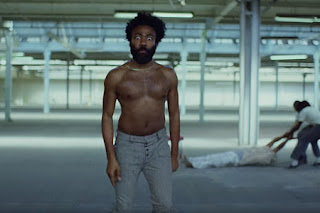
In this lesson of creative filmmaking we focused on opening scene and the 'This is America' music video by Childish Gambino, directed by Hero Murai.

The music video has a bold visual representation of America's social issues including Black oppression, incarceration, gun control, school shootings and many more. The whole video is shot continuously almost as if the camera doesn't cut away or is not edited, this is because they used invisible cuts which can be created to seem seamless to the audience however they do indeed cut.

The three camera techniques used in this music video were:

  • The Steadicam
  • The 'Continuous' Take
  • The Whip Pan

The Steadicam:
The steadicam is a camera stabiliser mount that provides smooth and fluid motion without the need of a dolly track. The steadicam was invented by Garrett Brown in 1975 and is used frequently in todays films and videos. Even a mobile stabiliser has been created making video making more accessible to more people, it is also a good alternative if you're on a budget.


The Continuous Shot:
A continuous shots/ long takes are shots that last a lot longer than conventional shots. Editing helps a lot with these types of shot to make multiple shots appear as one by using different types of camera movements or objects that allow you to change from one scene to another seamlessly. A few examples of continuous shots would be the 'Russian Ark' directed by Alexander Sokurov in 2002. The film is 96 minutes long and is one continuous shot of the Russian State Hermitage Museum and recreating history as the
 camera travels from one room to the next.


The Whip Pan:
The Whip Pan is generally when the camera pivots to combine two shots into one without the need to cut. The technique occurs when the camera moves so quickly that the image blurs, these couple seconds of blurriness are the key area to hide a cut if it is needed, giving the effect go the action still happening so the audience is still hooked. 

Wednesday, 14 October 2020

Video Montage/ Old Editing Video


 For this video example, i was set the task to create an old school montage type of video. So I filmed my mum and sister baking some halloween cookies however with the use of editing and premier pro, i was able to edit it in a way that gave the video a old type of feel to it. I did this by adding a black and white filter to each clip as well as overlaying a flickering effect to give the illusion that it was filmed on a older camera almost as if it was actually filmed on film. If I was to go back and make improvements to this video, I would have tried to add more light to a few of the clips as in areas of the video the clips are a little darker than other. Typically I would have used a tripod however for this style of video it was meant to represent a home video so the hand held style suited the style of the video more.

Thursday, 8 October 2020

Creative Filmmaking Notes - Opening Scene

 An example of a movie opening we watched was 'Whiplash', directed by Damien Chazelle in 2014. They used shots appearing higher than the actor so it gives the impression that the actor is smaller and more vulnerable, even scared. This means the main objective is shown to the audience straight away.


Another example of a film opening we watched was called 'Apocalypse Now' directed by Francis Ford Coppola in 1979. This movie opening starts out slow with a pan of palm trees and a song called ' The Doors, The End'. This song begins to increase in the beat when their are explosions happening in the forest while the camera shot pans across. The editing then begins as split screens of a actor fade in and out on the screen representing the reality and nightmares. Showing to the audience that his memory is blurring together showing signs of PTSD. 
Their is a voice over further into the opening scene and the low key lighting give the impression that the main character is very mysterious and has tortured ways.
This American Film is about the Vietnam War so includes a lot of action. Ryan's analysis included that the opening scene combines thumping diegetic sounds, chaotic music, visual overlay dissolves of fire, helicopters, fans, alcohol and weapons to create a thick atmosphere of mental anguish. Another sign of PTSD that is represented to the audience is that the helicopter propellers and the hotel fan are synced together to show the link of how messed up his head is and what he has experienced in the past to link the two together.


'The Elephant Man' directed by David Lynch in 1980. This film was the first studio film of surrealist filmmaker David Lynch and it was based on the true story of Joseph Merrick who was a British man with severe facial deformities. The film is all in black and white and the opening has parts where it is in slow mo, to represent the trauma the actor was facing as she was being killed by the elephants. 
The sound of the opening includes harsh industrial sounds mixed with childlike circus themes which gives the movie a tone of darkness and innocence. Their are visual overlays of Merrick's mother with elephants portray Merrick's beliefs that he is the result of his mother being attacked by an elephant when he was younger.

Thursday, 1 October 2020

Split Screen Video


Split Screen Video: 
This is my attempt at creating a split screen video, the video doesn't have any meaning to it, it's just a series of clips of my sister doing everyday stuff on one afternoon. If I recreated or attempted to create a spilt screen video again I would improve it by using a tripod as well as adding a better light source as the lights in my house are very warm tinted so it makes the overall video appear very yellow/orange tinted. I would also spend more time making sure the actual split in the video was balanced throughout the video as I found this quite difficult to do, so I would spend more time on it.

Wednesday, 30 September 2020

Creative Filmmaking Notes - Split Screen

Micheal Gondry - He made music videos for Bjork, White Stripes, Chemical Brothers, Daft Punk, Radiohead. His music videos are known for surreal manipulation of mise-en-scene.

An example of Split Screen in movies would be 'The Parent Trap' or the phone call scene in 'Mean Girls'.

Split Screen is the division of the screen into simultaneous images. Usually split vertically but sometimes diagonally or multiple splits. In Split Screen, it can be used to duplicate actors or show two different locations or viewpoints.  This technique is a stylish way of editing a video however it removes a style of realism from the action.

The History of Split Screen:

Triptychs - intended to be read left to right and gives the viewers a simultaneous image of there biblical episodes.  Examples of this would be 'The Garden of Eden' and 'The Last Judgement'


Some examples which we answering questions about during lessons were; '500 Days of Summer', 'Requiem for a Dream' and 'Annie Hall - Psychiatrist'. More examples that were earlier examples of spilt screen were 'Queen of Spades' 1916 and 'Woodstock' 1970.


Practical Skills Evaluation

Evaluation: Over the entire unit my practical skills and knowledge of these skills have also increased a lot since the beginning of the year...